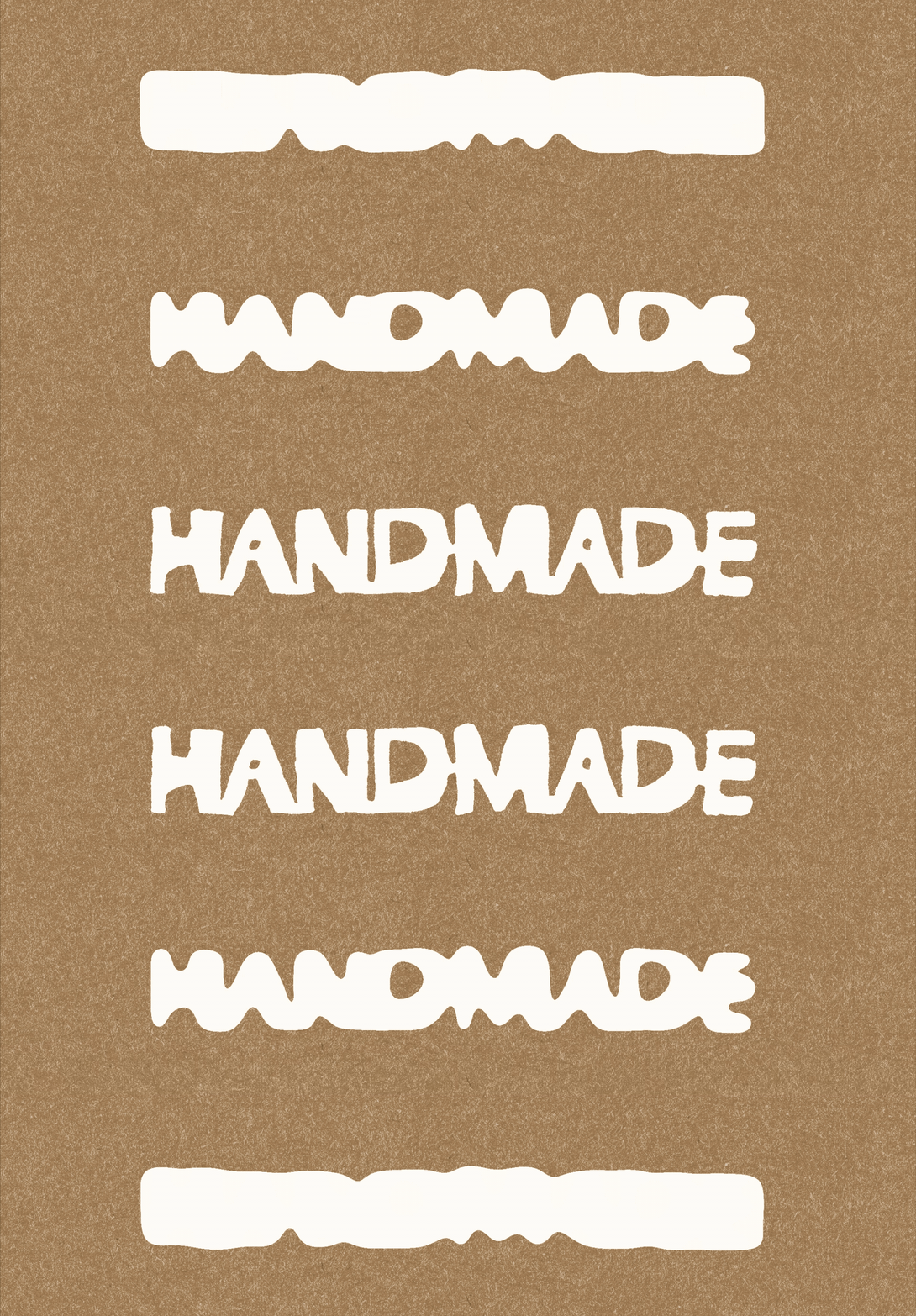
Rare Ideas partnered with the founders of Handmade to build a neighbourhood café brand anchored around the philosophy of made-from-scratch. We designed Handmade into a community space defined by visible care, everyday warmth, and an experience designed for families to return to.
Project Overview
Client
Handmade
Studio
Rare Ideas
Timeline
2026
Disciplines:
Brand Narrative
Naming
Visual Identity
Experience Design

Background & Context
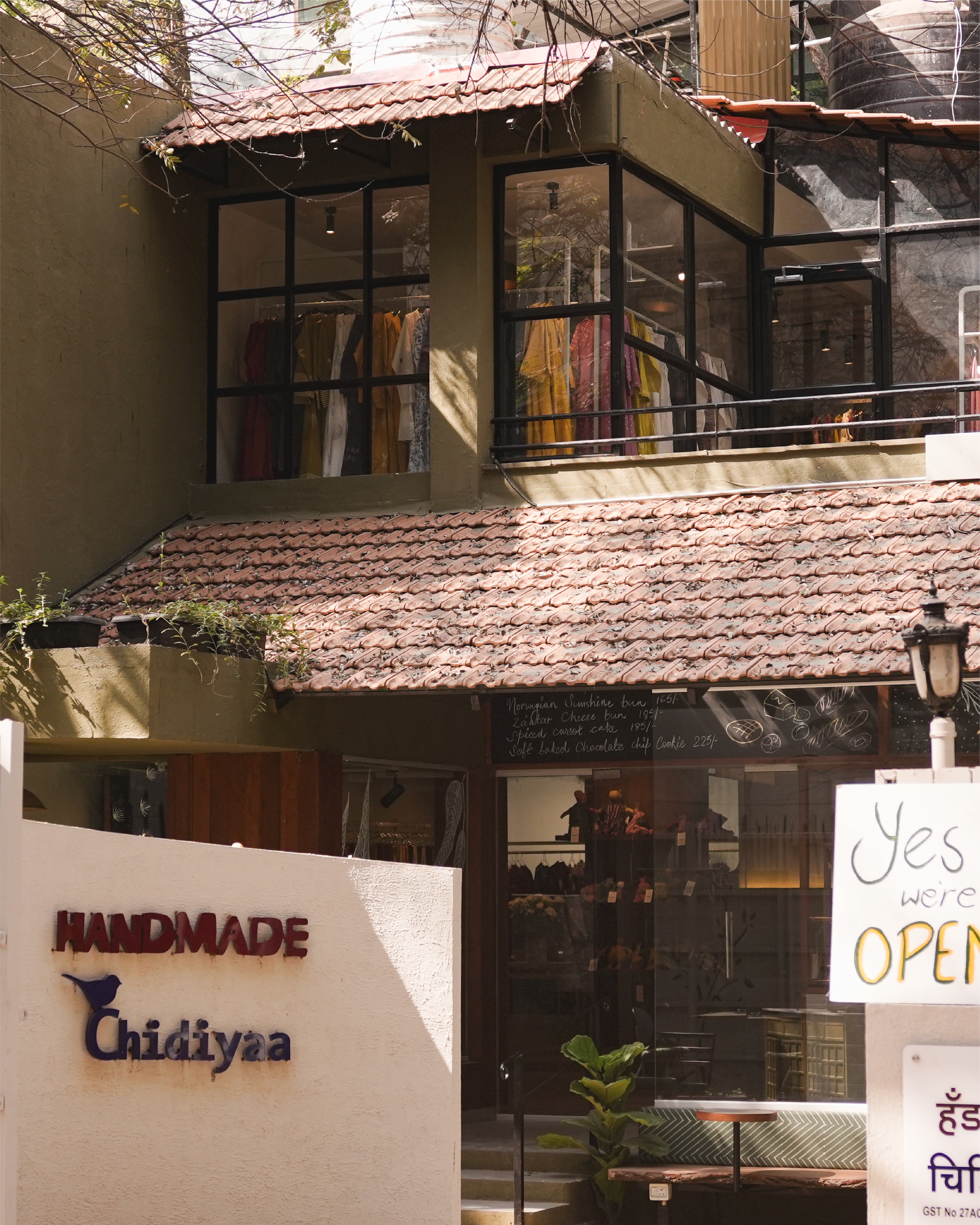
Kalyani Nagar, Pune has a high concentration of cafés. In our research a clear gap emerged. Very few spaces are designed for time spent. Parents often struggle to find cafés where they can relax while their children are meaningfully engaged without screens.
Existing spaces are either adult-focused or overstimulating play zones. There are few environments that balance comfort, creativity, and quality food in one place.
Handmade was conceptualized to operate differently. The ambition was to build a neighbourhood space that encourages repeat visits, consistent relationships, and a slower rhythm of hospitality.
The opportunity was in redefining how the category creates a sense of belonging.
We structured this intent into a cohesive brand system that would guide identity, space, and experience design decisions.
The Challenge
Brand Concept
Made-from-scratch is commonly understood as a way of preparing food. For Handmade, it needed to function as a broader standard.
It reflects a clear choice: effort over shortcuts, consistency over spectacle, and familiarity over constant change.
This choice shapes how the café operates. It influences ingredient sourcing, guides seasonal menu updates, defines how children are included without overstimulation, and informs how community-led activities are planned. This thinking also extends into the design. Materials, forms, colours, and spatial cues reflect the same commitment to care and intention.
From this, the positioning was defined:
Handmade is a community living room, built on the belief that care is something you can see, touch, and feel.
This definition sets clear priorities. The café is designed for time spent rather than quick turnover, for relationship-building rather than trend visibility, and for warmth rather than exclusivity.
It also sets clear boundaries. The brand avoids decorative craft clichés, excessive styling, and overly minimal environments that feel detached from human presence.
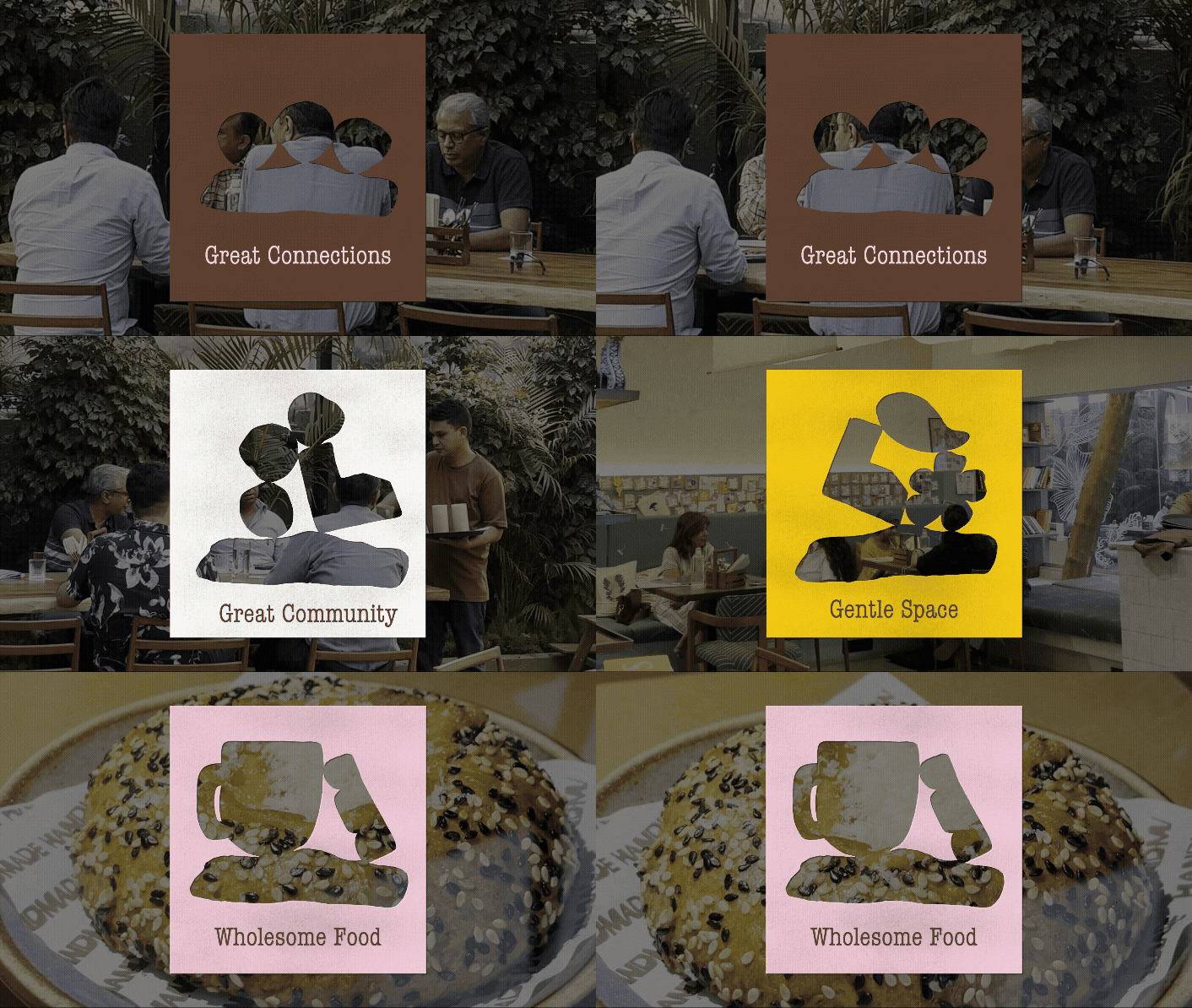
Every decision is measured against one question: Does this make care visible?
Design Lens:
Building the Brand World
Design Language Concept
Our aim was to make the idea of made-from-scratch visible. Not through literal imagery, but through a design language that signals, at a glance, that this brand was built by hand and shaped with intent.
Three principles guide every decision:
Craft
Texture over flatness. Organic form over geometric precision. Subtle irregularities that signal human involvement.
Connection
Rounded forms, balanced layouts, and an approachable structure that supports familiarity.
Calmness
Controlled use of space, a restrained palette, and the absence of visual noise to support ease and conversation
Together, these principles ensured that the brand expression aligned with the founders’ vision of a slow, wholesome, family-oriented space.
Identity Design
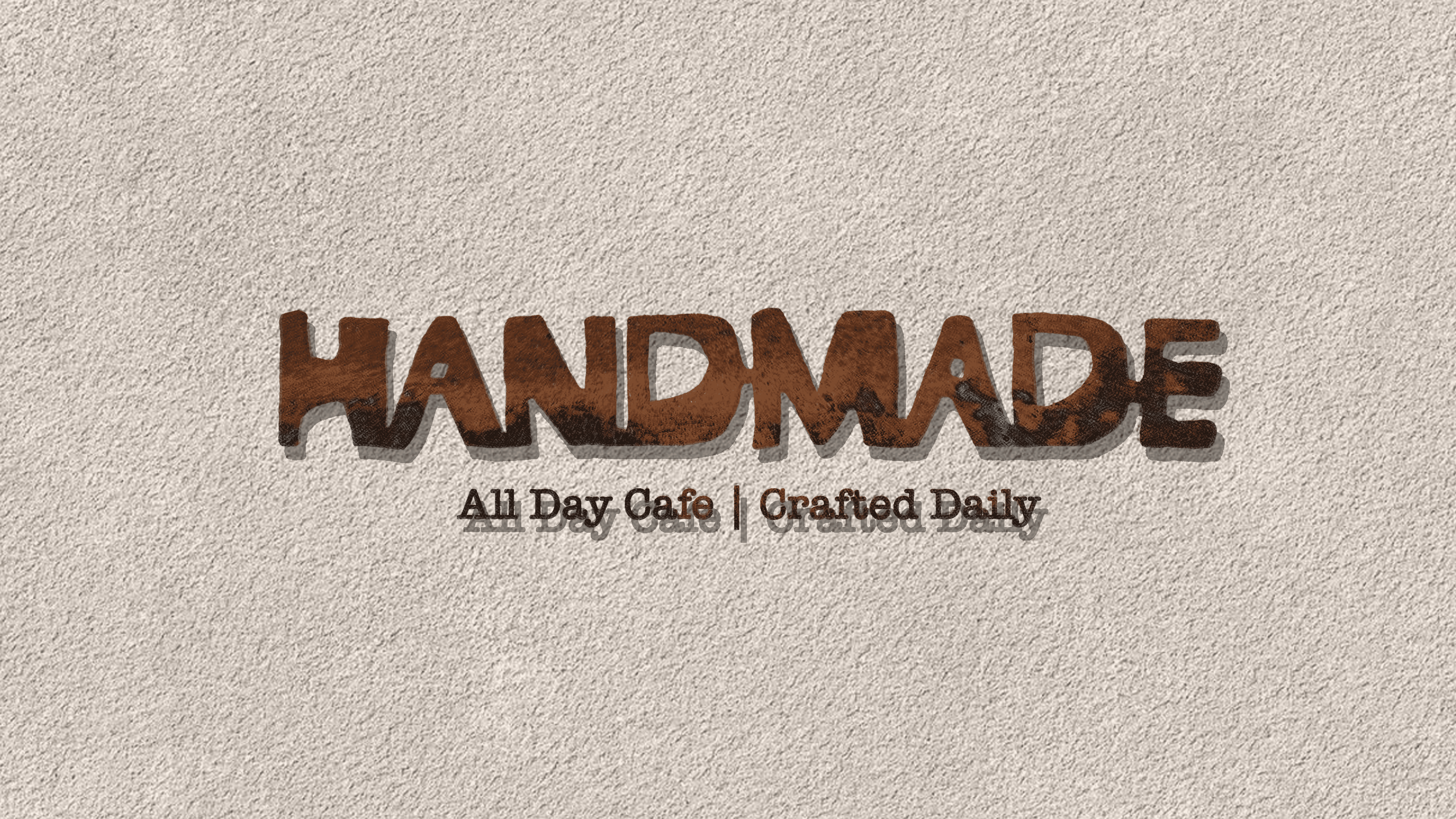
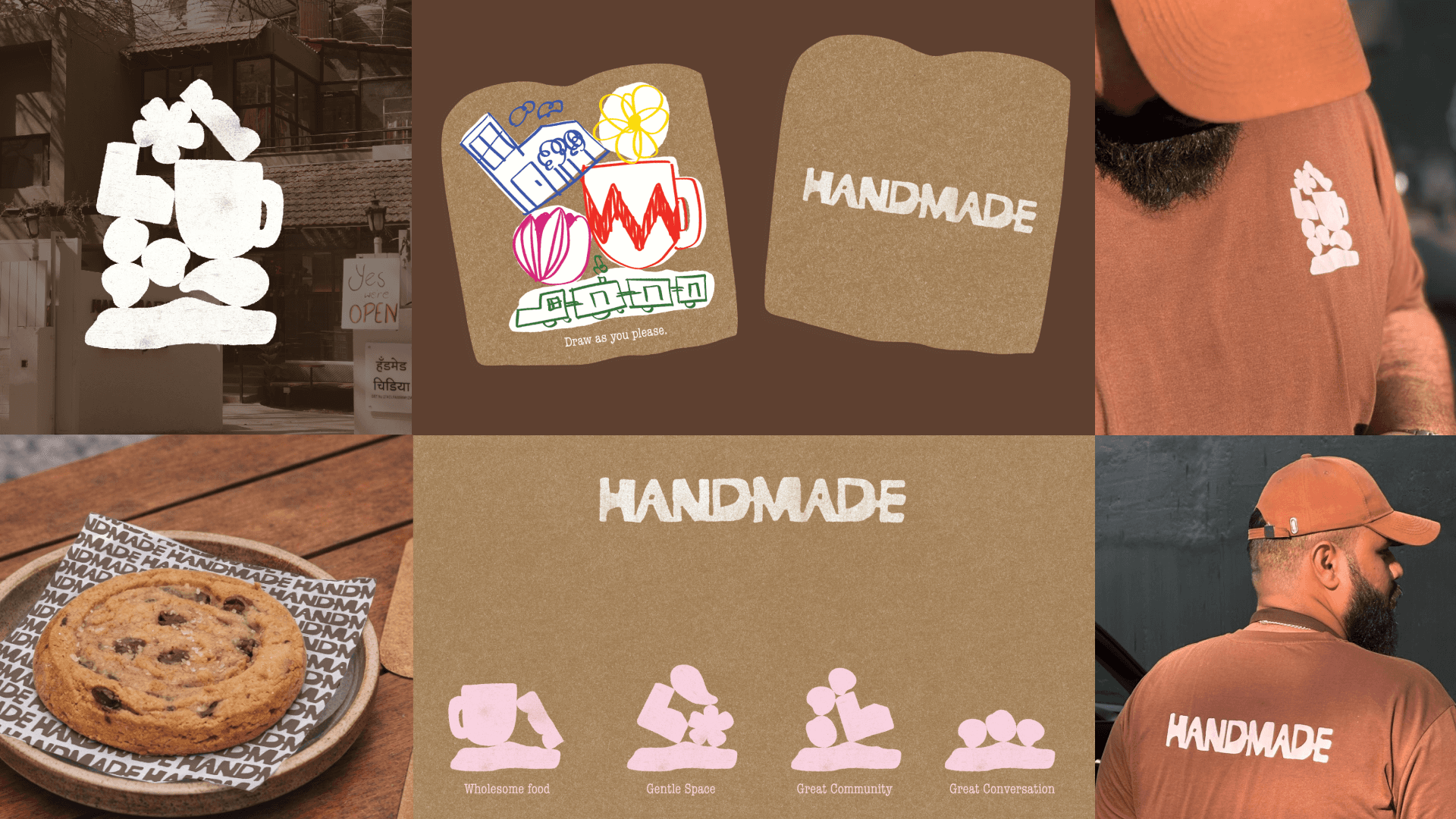
The mark draws from block-printing and clay-based craft traditions and functions as a stamp. Its structure is defined by:
A thick silhouette that provides grounding
Softened edges that introduce warmth
Slight irregularities that reflect a hand-shaped quality
The logo communicates made-from-scratch through structure rather than illustration.
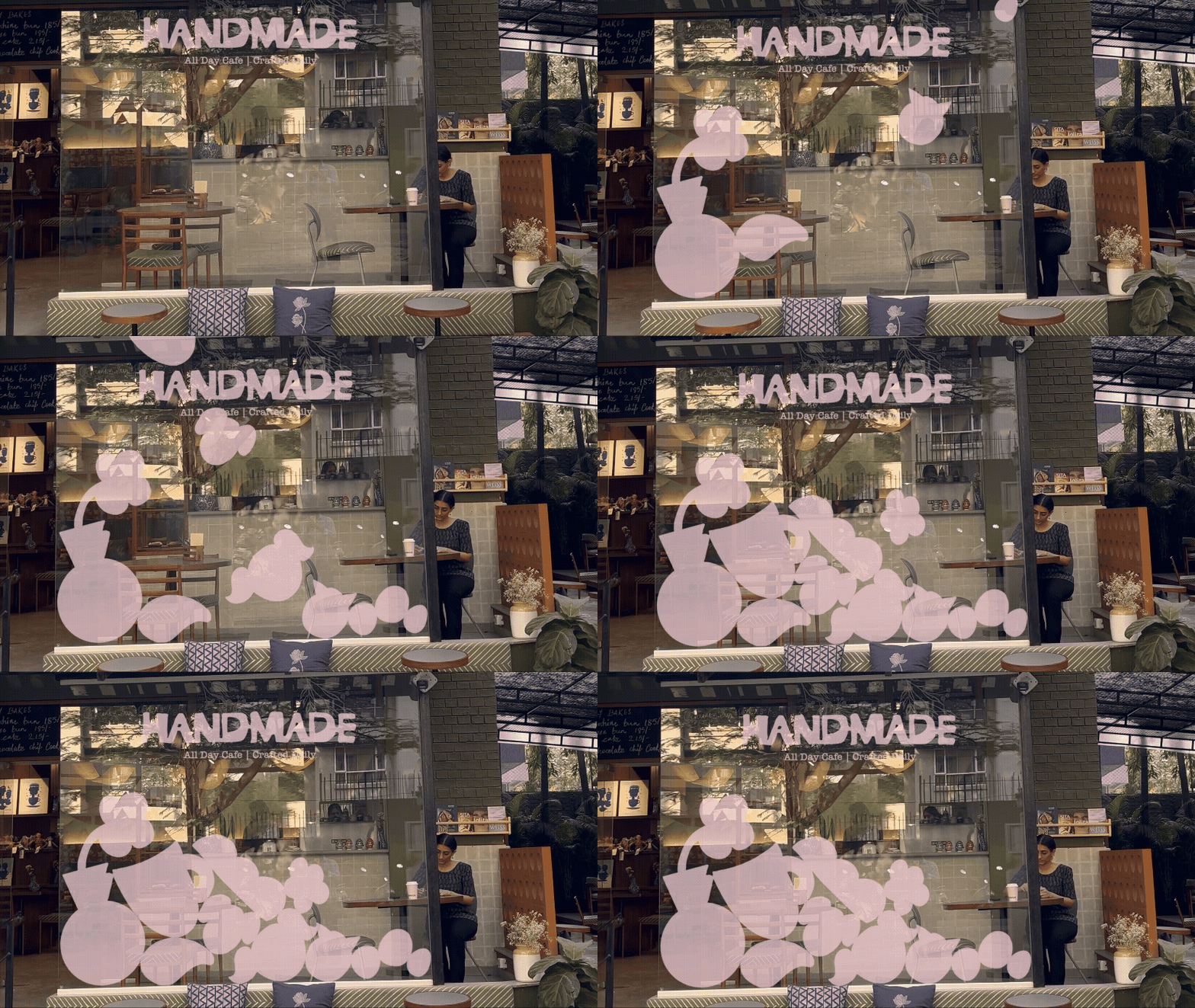
Visual System
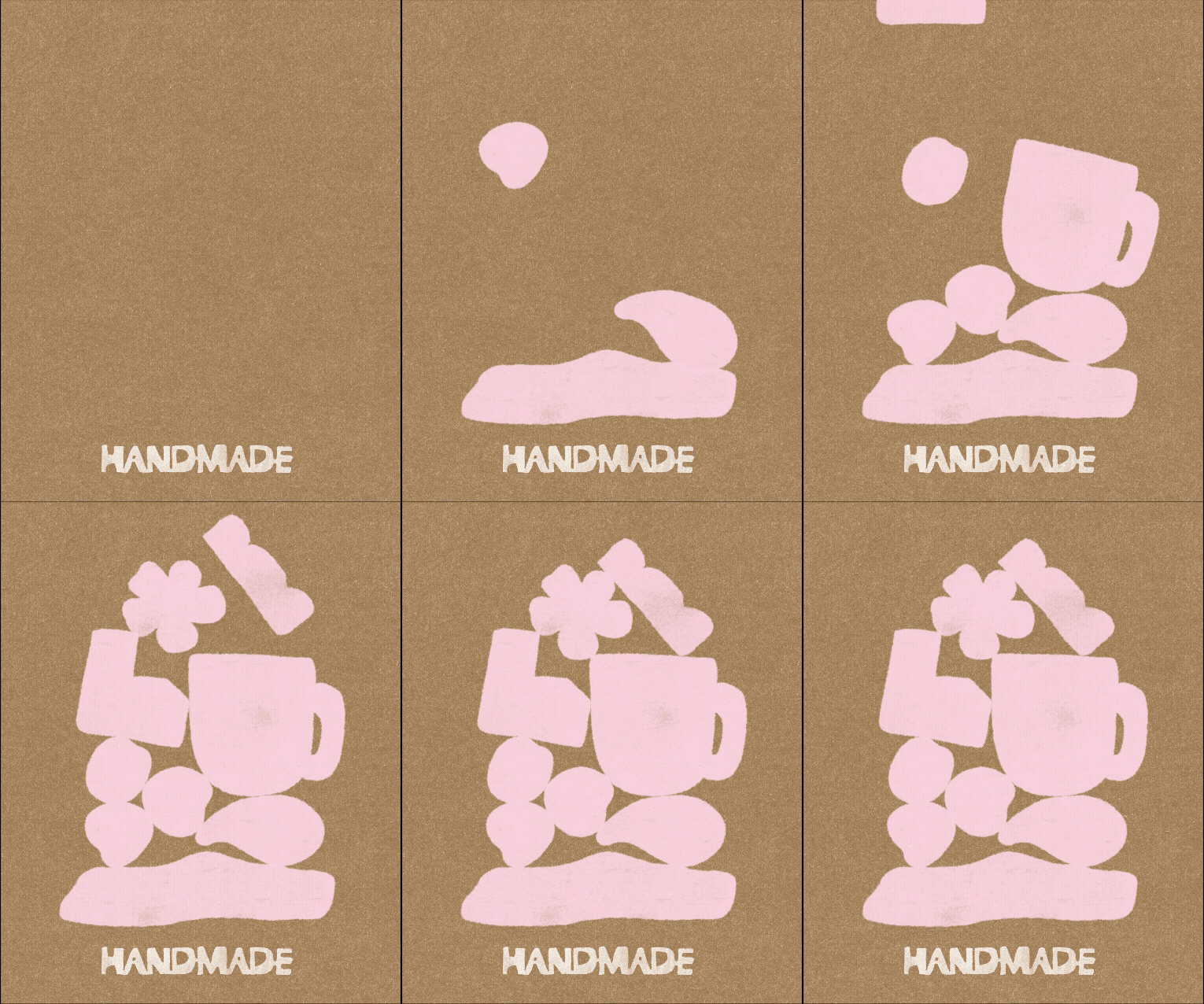
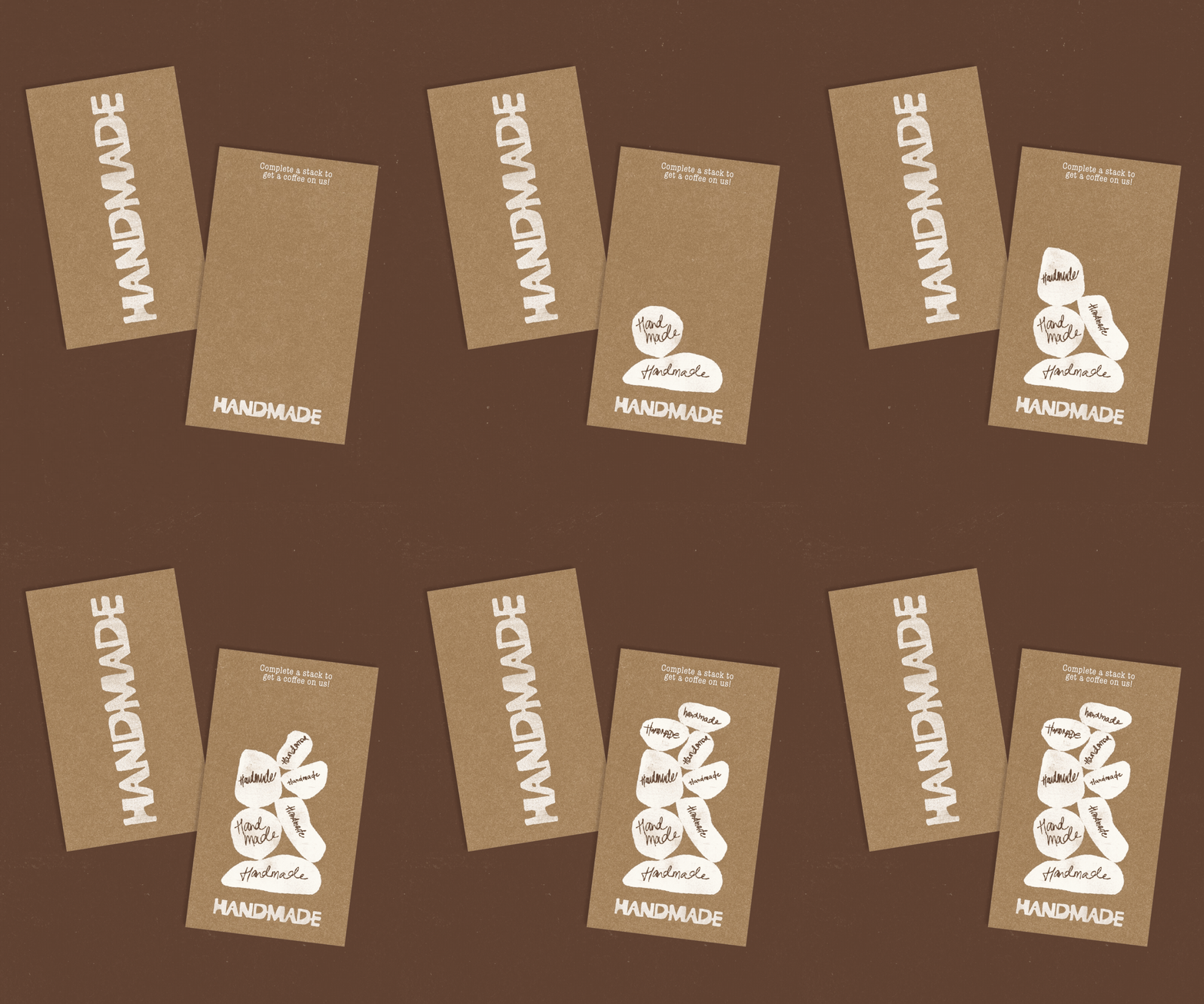
Organic shapes stacked in balance form the backbone of the system. Each element is designed to express:
Tactility through textured, relief-like surfaces
Care through visible imperfection and variation
Human involvement through non-geometric forms
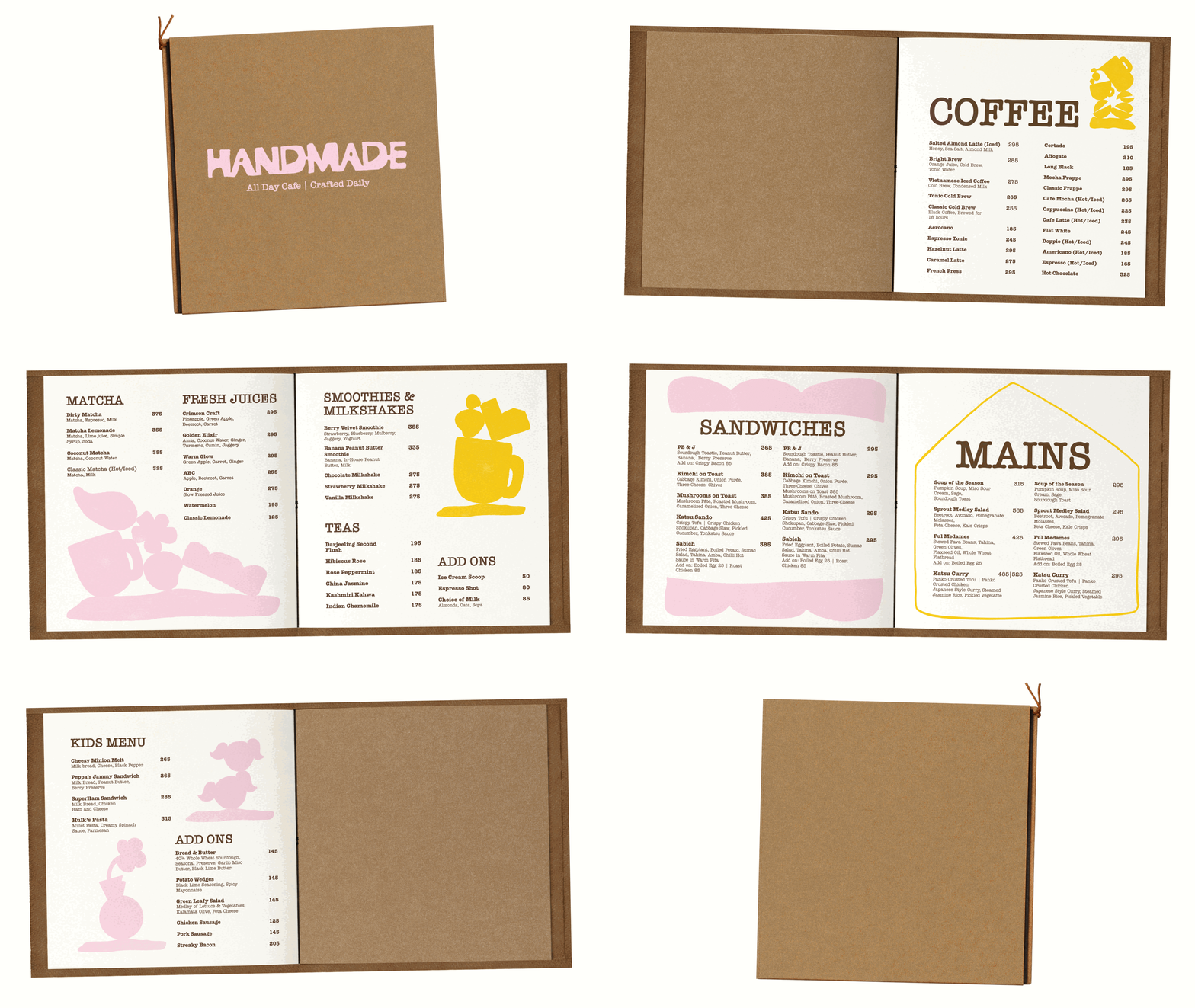
The system is modular and repeatable, extending across menus, packaging, signage, and spatial graphics without losing coherence.
Colour Strategy
The palette is rooted in natural tones.
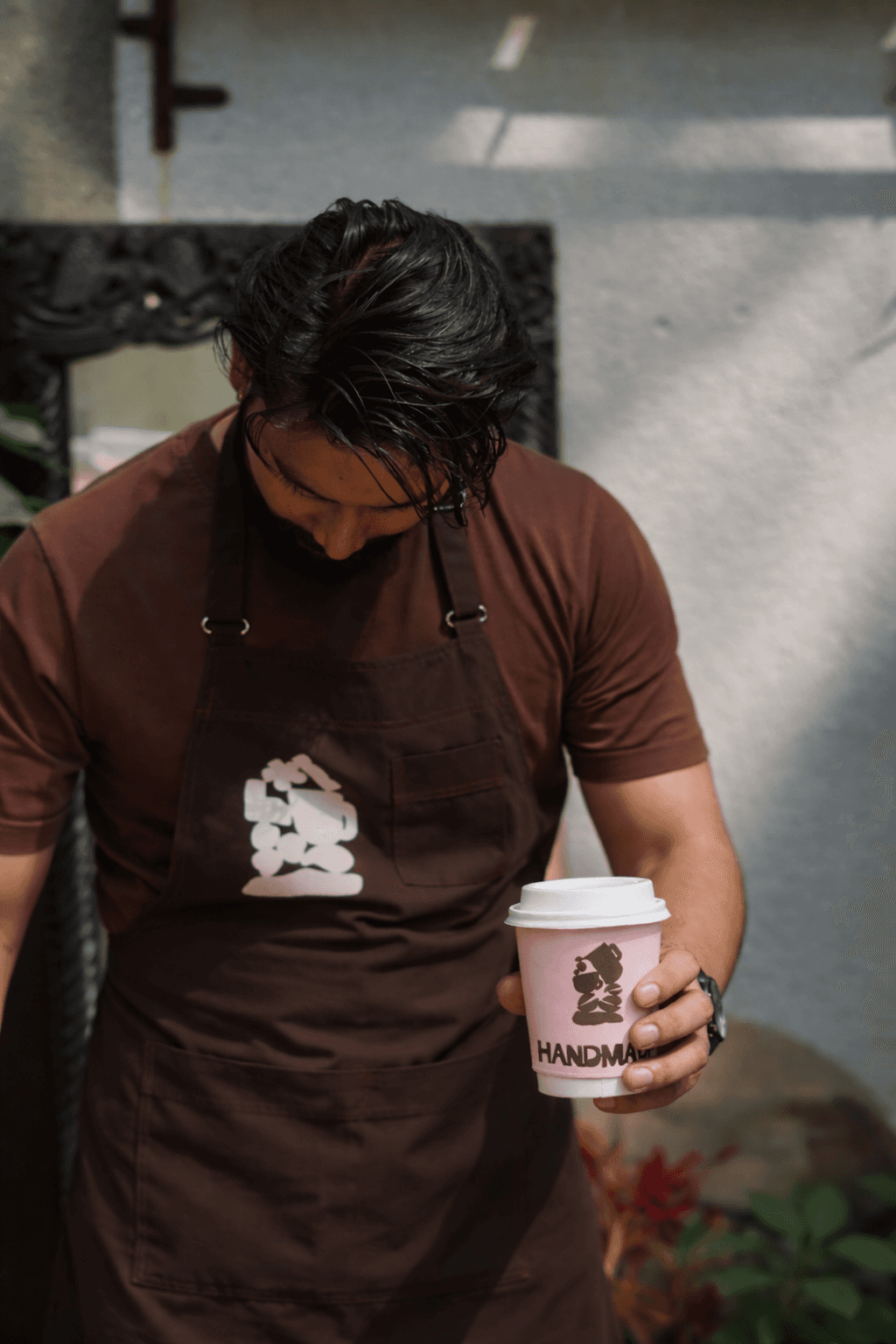
A deeper brown provides structure and connects to the idea of soil, grounding, and materiality. White introduces clarity. Muted pink and soft yellow act as controlled accents, present enough to add warmth, restrained enough to never overwhelm.
The palette reinforces warmth and stability while maintaining visual calm.
Experience &
Brand Collaterals
The idea of made-from-scratch extends beyond visuals into how the space is experienced.
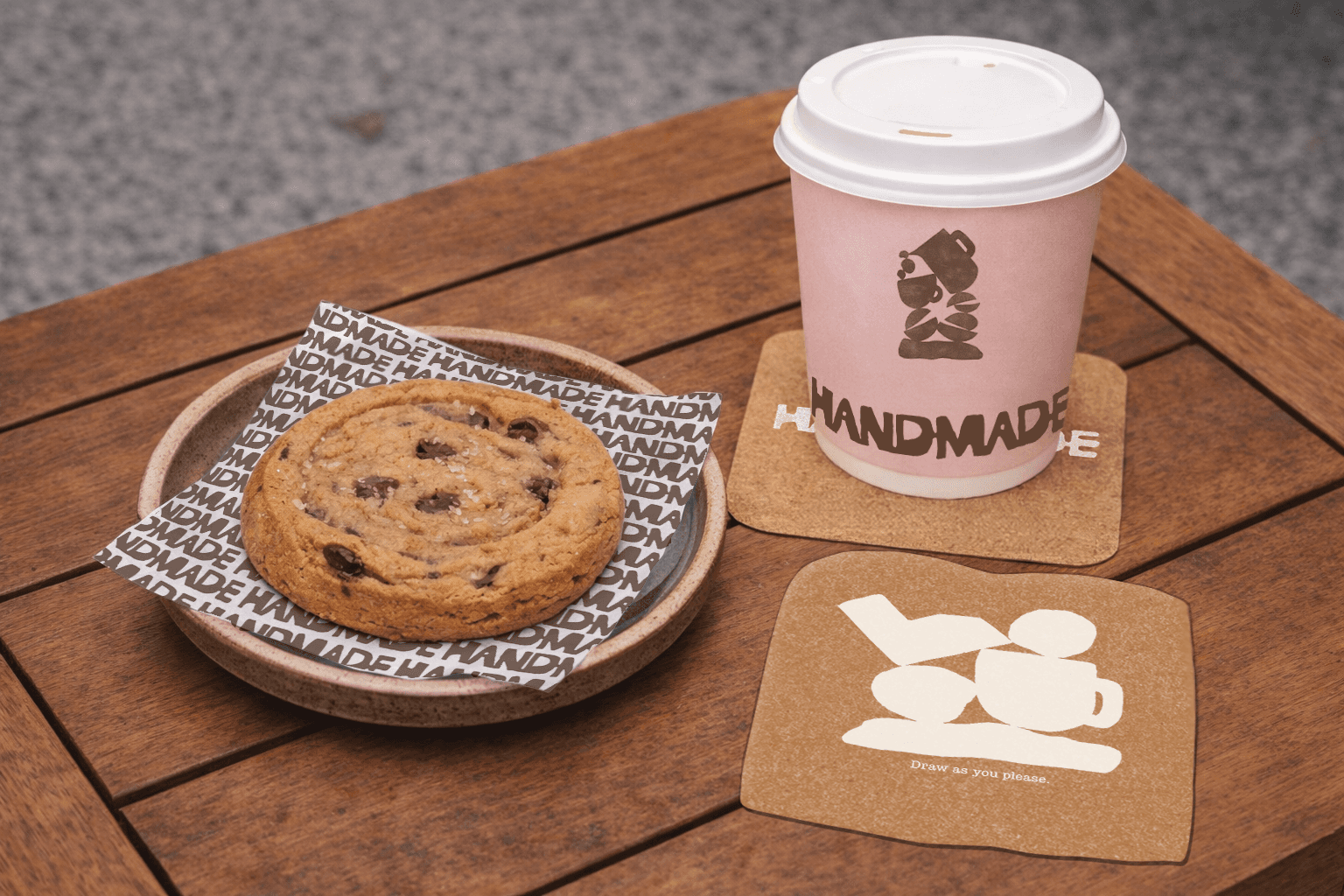
Children are treated as active participants rather than secondary visitors. Coasters designed to be drawn on transform a functional object into a moment of making.
This simple intervention allows children to engage creatively while parents remain present and at ease. It reinforces the idea that Handmade is not only about serving food made from scratch, but about enabling small acts of making within the space.
Across menus, packaging, signage, and spatial elements, the same design principles are applied, balance, tactility, and restraint.
The narrative, design language, and experience operate as one system.


Outcome
Handmade launched with a clear and consistent identity aligned to its founding vision.
The idea of made-from-scratch is expressed through visual structure, material sensitivity, and participation within the space. Care is not communicated through messaging alone. It is visible and experienced.
The brand system supports longer dwell time, encourages repeat visits, and creates a foundation for community-led engagement.
Featured On


Credits
Client
Studio
